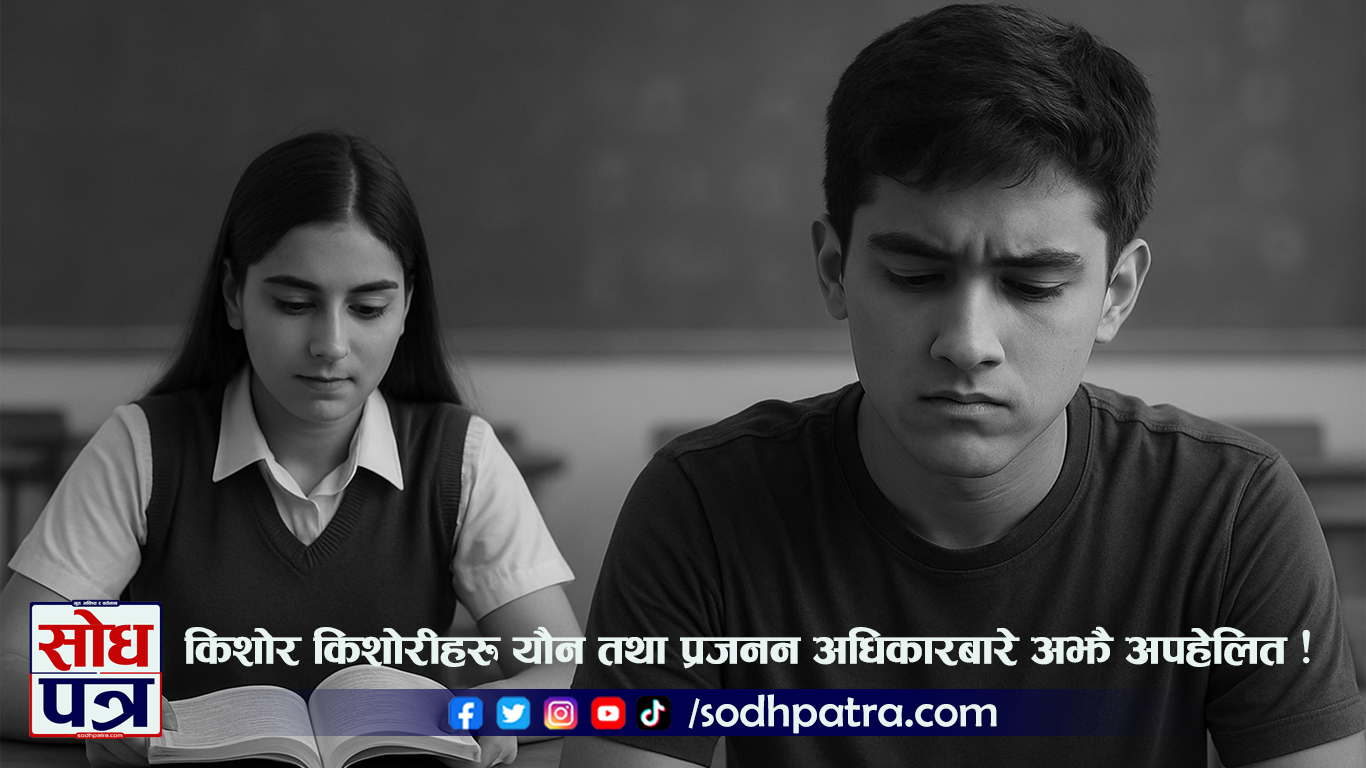
Dhangadhi: “We study science in school, but the teacher is ashamed when talking about sexual health,” says 17-year-old Anu (name changed) from Dadeldhura. She is studying in class 11 at a community school in Dadeldhura. Like Anu, many teenagers are still struggling alone with their sexual and reproductive curiosities, fears and problems.
It is important to know about sexual and reproductive health while entering puberty from adolescence. But this issue still seems to be taboo in society. “We talk to friends, but a lot of things are filled with false or incomplete information,” says Ramesh Air, 18, of Dadeldhura. He suffered mental stress for fear of sexual infection some time ago, but there was no environment to tell anyone.
- Insolvency in access to healthcare
The problem of lack of access to sexual and reproductive health services for the youth of Durgam village is even more serious. According to a 19-year-old boy from Bajura who came to study in Dhangadhi, “There is a health post in our village, but it is difficult to talk like this, the employee is the age of the parents. In such a situation, young people are confused with the choice of going to a private clinic or searching on the Internet.
- Some people don’t know – ‘What is my right?’
The Constitution of Nepal guarantees sexual and reproductive health as a fundamental right. But in practice, not many young people are aware of this right. “We don’t know what we can demand,” she says. Many girls like her are forced to stay under regular stress due to lack of school during menstruation, lack of sanitation, or fear of infertility.
- A lot of people try to talk, there is no one to listen to
The basic things like sexual education, counseling services, privacy, safe health care are still difficult dreams for many teenagers. Youth activist Maneka Od says,
“Youth have started speaking, but the state and society are still not ready to listen. Earlier, adolescent girls did not want to talk about sexual and reproductive health, she says, “We had run many programs in collaboration with Yad Nepal and Family Planning as volunteers, we had conducted such programs from different schools of Dhangadhi to hilly districts, due to which teenagers have had some positive effects related to sexual and reproductive health, there is a lot of improvement in urban areas compared to rural areas. । ”
She says that various organizations have conducted various programs related to sexual and reproductive health of adolescent girls, which has had a positive impact. Teenagers in the city have started openly raising problems related to sexual and reproductive health, but there is still a lack of education in rural areas, she said, “The state should run the sexual and reproductive health of adolescent girls as a campaign. । ”
The effective implementation of inclusive sex education in schools, strengthening adolescent-friendly health care centers, awareness programs for parents and teachers at the community level, ensuring privacy, etc. will improve the sexual and reproductive health of adolescent girls. ।
To discuss the sexual and reproductive rights of young people requires awareness, not shame. It relies on the active ness of the state, schools, parents and the youth themselves to create an environment where they get safe, respectful and informative services.
All citizens should cooperate to ensure the right of adolescent girls and youth to access safe, respectful and informed sexual and reproductive health services. Families, schools and societies should take the lead in creating an environment of open dialogue, scientific education and service without discrimination.